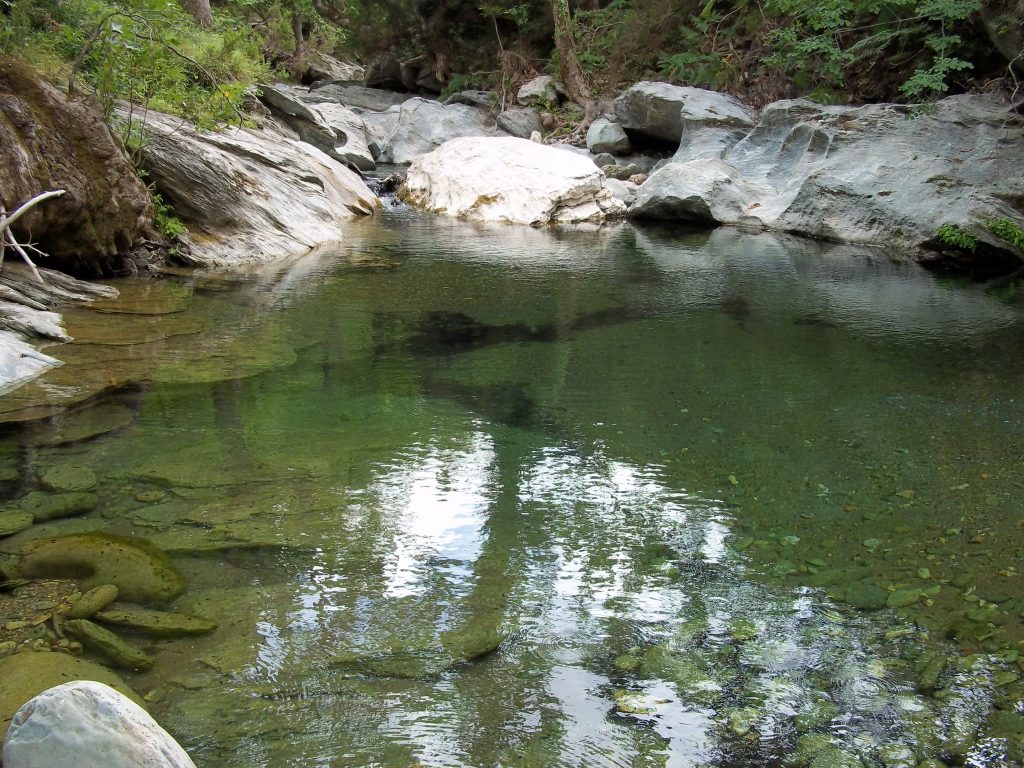
Below there is a very short summary of my Project, followed by a brief presentation and then a middle-sized presentation. For the full article, check the next menu The Hrigaia Project. All this is part of the heading: Rellationship with Nature
A Natural Agroforestry Initiative
Letting the Primal Forest Return via a Synergy of Vegan Soil Amendments & Multiseed Broadcasting
Executive Summary:
The HRIGAIA Project
The HRIGAIA Project is a scalable, non-extractive ecological model designed to restore both human alignment and nature to their original, self-sustaining blueprint. By shifting away from any kind of agriculture that degrades the earth, HRIGAIA partners with natural succession to transform degraded lands into thriving, edible, climate-resilient ecosystems.
Core Methodologies
Multiseed Pellet Broadcasting
Inspired by Masanobu Fukuoka’s natural farming, seeds of endemic and edible species are encased in clay pellets and broadcast directly onto the land. Nature self-selects what grows where, eliminating plowing, tilling, and heavy machinery.
Vegan Soil Enhancement
Soil fertility is built entirely without animal inputs, utilizing a precise triad of:
Microorganisms found in compost, utilizing a vast array of organic materials mixed with virgin soil.
Trace Minerals sourced from Seawater Ormus, volcanic rock dusts, and seaweed.
Biochar that provides a permanent, porous habitat for microbial life.
Unified Agroforestry Structure
This approach combines wild endemic species with edible species broadcasted within a comprehensive design. It integrates retractable-roof propagation greenhouses along with subtle energy and low-impact tools that enhance nature’s innate intelligence. These supporting systems include:
Water energizers inspired by Viktor Schauberger.
Manual tools electroplated with bronze.
Electromagnetic devices based on Dr. Callahan’s research and others.
Customized mold presses for soil-block nursery propagation to completely replace plastic bags.
The Ultimate Goal
HRIGAIA offers a low-maintenance, wildfire-resistant, and economically viable blueprint for global reforestation that simultaneously provides clean food production. Operating on a non-profit, collaborative basis, the initiative provides open-source education, seed banks, and worldwide consulting to reverse global ecological decline and restore planetary balance.
A brief Presentation of the HRIGAIA Project
The Restoration of Man (at all levels HRI) and Nature (GAIA) to Their “Original Blueprint”
Introduction
The HRIGAIA Project seeks to establish a sustainable, natural living environment that fosters human awakening, peaceful coexistence, and the restoration of nature to its primary state.
This article gives a brief overview of how to restore Nature to its original form. This means to recreate original, life‑supporting ecosystems capable of nourishing human beings through the introduction of endemic and edible species together, all within a peaceful and non‑extractive relationship with the Earth.
We do this with the understanding that true restoration begins within — through the awakening of our innate freedom and perceptive clarity. When this inner alignment is present, soil fertility increases, biodiversity flourishes, and ecosystems reorganize themselves into resilient, harmonious forms.
Sources of Inspiration
This vision has emerged from five decades of inner development, a life attuned to Nature’s rhythms, and fifteen years of practical experimentation on the methods of Masanobu Fukuoka’s natural farming, vegan permaculture, and sustainable no‑till techniques from experienced growers.
Harmonious Ecosystem Dynamics
Every vegetation layer — from canopy to ground cover — plays a role in optimal ecosystem function. Mycelial networks enable plants to share resources and support each other. Leaf‑eating insects encourage plants to develop more resilient leaves that can withstand the summer heat. When stressed by drought, trees “magnetize” rain by emitting sticky volatile organic compounds that attract water vapor, forming raindrops.
These interactions reveal a profound intelligence woven into the fabric of life — an intelligence modern science is only beginning to recognize.
Benefits Arising From Its Creation
Educational: Serves as a research and training hub for volunteers, students, and farmers to replicate the model elsewhere.
Sustainable: Demonstrates a regenerative model that eliminates the need for plowing, fertilizers, or monocultures.
Restorative: Provides a replicable strategy for reforesting degraded and barren lands, meadows, and burned forests with endemic non‑flammable species to reduce wildfire risks.
Economically Viable: Generates income through sustainable food production, seed banks, and ecotourism.
Low Maintenance: Nature self‑regulates over time, requiring only minor interventions such as pruning dead branches to touch the soil in order to decompose faster.
By mimicking natural ecosystems, we align with nature’s regenerative potential. Just as no wild forest tree requires fertilizers or manure, our ecosystems thrive without such inputs.
Implementation Strategy
1. Increasing Biodiversity
We establish permanent green cover through a “smart” planting strategy that eliminates plowing or tilling, preserving soil integrity.
We begin by sowing a variety of seeds in clay pellets. Seeds inside the clay are protected during germination and early growth. Initial plantings focus on soil‑enhancing species that prepare the soil. Subsequent plantings introduce over 300 native and edible fruit trees, shrubs, climbers, perennials, and annuals to create a resilient, site‑specific ecosystem.
We bring the seeds, and Nature does the rest by choosing what grows and where.
Tree Planting Methods
Method One: Broadcast clay pellets containing only endemic species. Simultaneously, start desired fruit trees in a nursery. After 1–3 years, once endemic flora is established, carefully transplant the nursery trees into selected spaces, thinning wild growth if necessary.
Method Two: Include fruit tree seeds in the initial clay pellets if seed surplus allows. This will require later transplanting and thinning of seedlings.
2. Enhancing Soil Fertility
We employ three core natural soil enhancers:
• Microorganisms (from compost, mulch, mycelium) to convert inorganic substances into bioavailable nutrients.
• Trace elements from seaweed, Ormus (monoatomic trace elements from seawater without the sodium chloride), and volcanic rock dusts (e.g., zeolite) to replenish soil minerals.
• Biochar, whose porous structure is colonized by microorganisms and protects them from extreme weather.
Earthworms and other natural amendments further contribute to soil vitality.
3. Feeding the Elemental Energy
This section includes the innovations that support the energetic and elemental dimensions of regeneration. These tools enhance water vitality, soil paramagnetism, and the subtle forces that influence ecosystem resilience.
Regenerative Support Systems
Nature‑Based (selected examples)
• Ponds and wetlands for biodiversity and enriching irrigation water.
• Retractable‑roof greenhouses that open during the day and close at night, allowing plants to absorb the full solar spectrum and receive rain ,supported by passive heating from natural heating mass accumulators (water, etc.) that store heat during the day and release it at night.
• Solutions for water scarcity, solar desalination, and atmospheric moisture capture where necessary.
• Bronze‑electroplated manual gardening tools designed for efficiency.
• Mold presses for soil blocks nursery containers, replacing plastic bags.
• Systems for large‑scale seed/clay pellet production for no‑till reforestation.
Energy‑Based (selected examples)
• Electromagnetic energy devices to enhance soil paramagnetism, inspired by Dr. Callahan’s research.
• Water energizers inspired by Victor Schauberger to optimize irrigation water vitality.
• Additional field‑based tools that support the subtle energetic dimensions of soil and water.
Design and Zoning Strategies (Examples).
Zoned Design (Example).
Outer Zone: Native and wild fruit trees for food and wildlife.
Middle Zone: A mix of fruit trees, some wild ones, edible understory plants, medicinal herbs, flowers, and resilient vegetables. Some trees support climbing plants such as vines and kiwis.
Central Area: Multifunctional space for homes, greenhouses, nurseries, ponds, rock gardens, fountains, and artistic landscapes.
Regeneration Approaches (Examples).
Botanical Garden: Artistic planting of mature nursery plants for rapid establishment and ecotourism.
Partially Managed Growth: A blend of young nursery plants and native seed plantings, planted with minimal intervention.
Natural Regeneration: A fully self‑directed ecosystem, seeded and left to evolve naturally.
The Ultimate Goal
HRIGAIA envisions a global movement for large‑scale ecological restoration. Environmental destruction outpaces current regeneration efforts tenfold, making timely action essential. The HRIGAIA method offers a practical, scalable solution to reversing ecological decline and restoring planetary balance.
How You Can Get Involved
If you are interested in supporting or initiating a similar project, you can contribute through labor, funding, or land. For initial guidance, I am available to travel worldwide to share knowledge and help launch initiatives. As your work is for the Earth and not for profit, so is mine.
Let us regenerate the Earth and create a thriving, self‑sustaining future for all beings.
Α middle-sized presentation of the HRIGAIA Project
The Restoration of man (at all levels HRI) and nature (GAIA)
to their “original blueprint”.
The HRIGAIA Project seeks to establish a sustainable, natural living environment that fosters human awakening, peaceful coexistence, and the restoration of nature to its primary state. It envisions a lifestyle where individuals who resonate with higher consciousness live in harmony, honoring all beings and working to restore Nature to its original form.
This vision has emerged from five decades of self-evolution a life attuned to Nature’s rhythms and fifteen years of practical experimentation.
The Secret to Successful Restoration
The key lies in awakening the innate “freedom” of our multidimensional existence, which allows for a profound connection with the subtle forces of Nature. When freed from all influences that disrupt our natural state, everything follows its natural course —soil fertility improves, biodiversity flourishes, and nature returns to its original balance.
Applying this approach recreates a self-sustaining environment rich in biodiversity, filled with hundreds of endemic and edible species. These ecosystems provide all essential human needs— excellent food and shelter—without reliance on conventional or organic agriculture. Resilient to climate fluctuations, pests, and diseases, even the local microclimate changes.
The project’s uniqueness lies in prioritizing nature’s role over human intervention. By approaching Nature without a rigid “plan” and acting intuitively, we allow it to express its full potential, leading to an unparalleled transformation.
Coordination with Nature
Through developing Consciousness and long-term interaction with nature, we gain insights into natural processes and cultivate an intuitive ability to “listen”. This guides the successful choice of timing, seed types, quantities, the application of natural additives, etc.
Harmonious Ecosystem Interactions
Every vegetation layer—from canopy to ground cover—plays a role in optimal ecosystem function. Mycelial networks enable plants to share resources, and support each other. Even leaf-eating insects contribute by encouraging plants to develop more resilient leaves that can withstand the summer heat. In addition, when stressed by drought, trees “magnetize” rain, emitting sticky volatile organic compounds that attract water vapor, forming raindrops. This process illustrates the delicate balance between plant life and weather patterns. Modern biology continues to uncover nature’s remarkable self-sustaining mechanisms.
Sources of Inspiration
HRIGAIA is based on Masanobu Fukuoka’s natural farming principles. It accelerates regeneration by using non-animal natural additives, planting a wider range of edible and endemic species, and incorporating knowledge from vegan permaculture, and sustainable no-till techniques from experienced growers.
Implementation Strategy
1. Increasing Biodiversity
We establish permanent green cover through a “smart” planting strategy that eliminates plowing or tilling, preserving soil integrity.
We start by sowing a variety of seeds in clay pellets. Seeds inside the clay are protected during germination and early growth.
Initial plantings focus on soil-enhancing species that play a crucial role in preparing the soil.
Subsequent plantings introduce over 300 native and edible fruit trees, shrubs, climbers, perennials, and annuals to create a resilient, site-specific ecosystem.
We bring the seeds, and Nature does the rest, by choosing what grows and where.
Tree Planting Methods
Method One: Broadcast clay pellets containing only endemic species. Simultaneously, start desired fruit trees in a nursery. After 1-3 years, once endemic flora is established, carefully transplant the nursery trees into selected spaces, thinning wild growth if necessary.
Method Two: Include fruit tree seeds in the initial clay pellets if seed surplus allows. This will require later transplanting and thinning of seedlings.
2. Enhancing Soil Fertility
We employ three core natural soil enhancers:
- Microorganisms (from compost, mulch, mycelium) to convert inorganic substances into bioavailable nutrients.
- Trace elements from seaweed, Ormus (monoatomic trace elements from seawater without the sodium chloride), and volcanic rock dusts (e.g., zeolite) to replenish soil minerals.
- Biochar, whose porous structure is colonized by microorganisms and protects them from extreme weather.
Earthworms and other natural amendments further contribute to soil vitality.
.Design and Zoning Strategies
Planting designs vary based on location and objectives.
Option 1: Zoned Design
- Outer Zone: Native and wild fruit trees for food and wildlife.
- Middle Zone: A mix of fruit trees, some wild ones, edible understory plants, medicinal herbs, flowers, and resilient vegetables. Some trees here support climbing plants like vines and kiwis.
- Central Area: Multifunctional space for homes, greenhouses, nurseries, ponds, rock gardens, fountains, and artistic landscapes.
Option 2: Regeneration Approaches
- Botanical Garden: Artistic planting of mature nursery plants for rapid establishment and ecotourism.
- Partially Managed Growth: A blend of young nursery plants and native seed plantings, planted with minimal intervention.
- Natural Regeneration: A fully self-directed ecosystem, seeded and left to evolve naturally.
Additional Innovations
We integrate pioneering techniques to enhance sustainability:
- Ponds and wetlands for biodiversity and enriching irrigation water.
- Retractable-roof greenhouses that open during the day and close at night, allowing plants to absorb the full solar spectrum and receive valuable rain. They also use passive heating from natural heating mass accumulators (water, etc.) to absorb heat during the day and radiate it back at night.
- Solutions for water scarcity, solar desalination, and atmospheric moisture capture where it is necessary.
- Bronze-electroplated manual gardening tools designed for efficiency, superior to conventional ones.
- Mold presses for soil blocks nursery containers, replacing plastic bags.
- Systems for large-scale seed/clay pellet production for no-till reforestation.
- Electromagnetic energy devices to enhance soil paramagnetism, inspired by Dr. Callahan’s research.
- Water energizers inspired by Victor Schauberger- to optimize irrigation water vitality.
Benefits arising from its creation
- Educational : Serves as a research and training hub for volunteers, students, and farmers to replicate the model elsewhere.
- Sustainable: Demonstrates a regenerative model that eliminates the need for plowing, fertilizers, or monocultures.
- Restorative: Provides a replicable strategy for reforesting degraded and barren lands, meadows and burned forests, with endemic non-flammable species, to reduce wildfire risks.
- Economically Viable: Generates income through sustainable food production, seed banks, and ecotourism.
- Low Maintenance: , Nature self-regulates over time, requiring only minor interventions such as pruning dead branches to touch the soil in order to decompose faster.
By mimicking natural ecosystems, we align with nature’s regenerative potential. Just as no wild forest tree requires fertilizers or manure, our ecosystems thrive without such inputs.
The Ultimate Goal
HRIGAIA envisions a global movement for large-scale ecological restoration. Given that environmental destruction outpaces current regeneration efforts tenfold, it is imperative to act now. Our method offers a practical, scalable solution to reversing ecological decline and restoring planetary balance.
How You Can Get Involved
If you are interested in supporting or initiating a similar project, you can contribute through labor, funding, or land. For initial guidance, I am available to travel worldwide to share knowledge and help launch initiatives. As your work is for the Earth and not for profit, so is mine.
Lets regenerate the Earth and create a thriving, self-sustaining future for all beings.
This is a way that the Earth becomes better than before
You will find the extended version as Hrigaia Project in the menu
Contact details: Yannis Diamantopoulos
Email: jdiamantes8@gmail.com
Phone / WhatsApp / Viber : +306982156490
Facebook: Eukanthos Eukanthos


